The Short Answer on Refacing, Refinishing and Replacing
If the cabinet boxes are sound and the layout works, reface. If the layout is wrong or the boxes are wet, replace. If you only want a different colour and the doors are good, refinish. That is the whole decision, and the reason it feels harder than it is is that cabinet companies sell one of the three and describe the other two accordingly.
The Four-Point Box Test
You can run this yourself in about ten minutes, and it is the same test any honest cabinet refacing estimator runs when they arrive. Every point is about the cabinet boxes, because the boxes are the only thing refacing keeps.
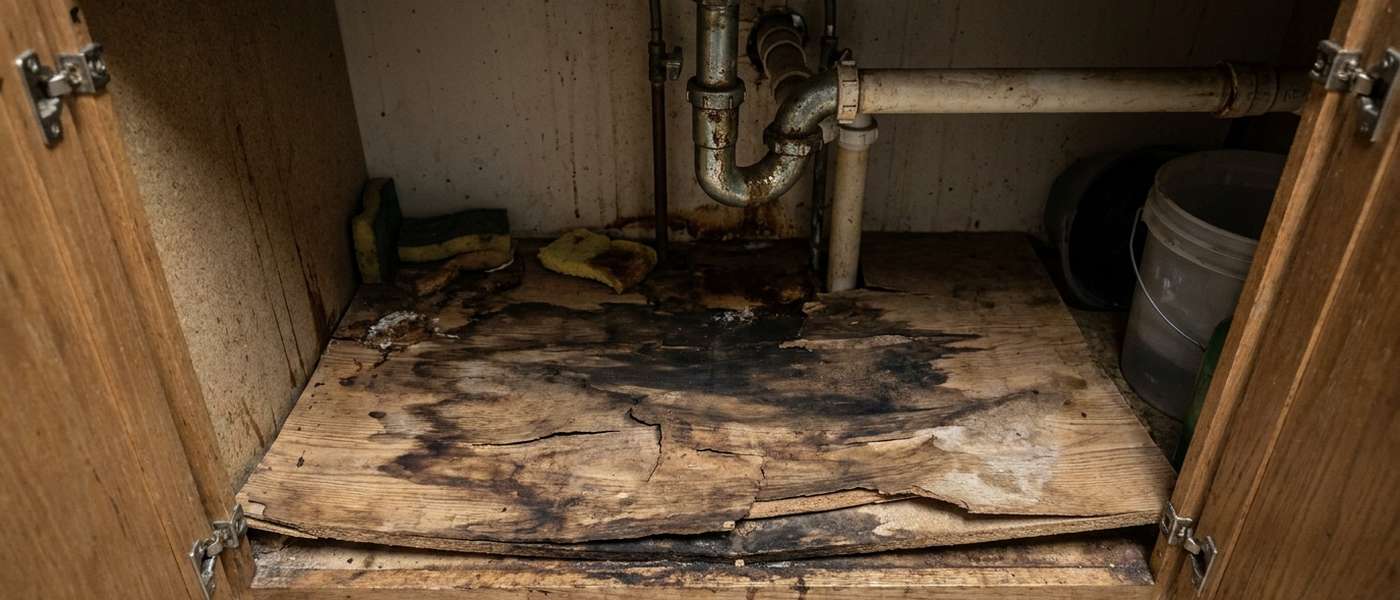
- 1. Press the sink base bottom. Open the cabinet under the kitchen sink and push the floor of it firmly with your thumb. If it gives, flakes, or has a dark tide line, water has been working on it. This is the single most common reason a Columbus kitchen fails a reface assessment.
- 2. Check the cabinet run for square. Look along it with the doors closed. Do the gaps between the cabinet doors stay parallel, or do they open into a wedge? Boxes that have racked out of square will not accept new cabinet doors without shimming, and past a certain point they will not accept them at all.
- 3. Tug a door. Pull a door firmly at the hinge side. If the hinge screws pull out of soft, crumbling material rather than holding into solid wood or dense board, new hinges have nothing to grip and the reface will not hold.
- 4. Load a shelf. Look at the cabinet shelves under weight. A permanent sag says the box material has failed even where the cabinet front still looks fine.
What Each of the Three Cabinet Products Actually Changes
The words get used loosely, so here they are pinned down. Cabinet refinishing keeps your existing cabinet doors and changes only their colour. Cabinet refacing replaces the doors and drawer fronts and skins the visible faces of the cabinet boxes in matching veneer, so the cabinets read as new while the carcasses stay put. Cabinet replacement takes the boxes out entirely and is the only one of the three that can move a cabinet, add a drawer bank or change the layout.
Cabinet resurfacing is not a fourth product. It is a synonym almost everyone uses for refacing, and if a quote uses that word it is worth confirming which of the three it means before comparing prices.
Refacing, Refinishing and Replacing Side by Side
| Refinishing | Cabinet refacing | Replacement | |
|---|---|---|---|
| Typical cost | $2,000 – $4,500 | $4,000 – $10,000 | $12,000 – $30,000+ |
| Time on site | 3 – 6 days | 3 – 5 days | 2 – 6 weeks |
| Kitchen usable | Mostly | Yes, throughout | No |
| Door style changes | No | Yes | Yes |
| Layout changes | No | No | Yes |
| Countertop stays | Yes | Yes | Rarely |
| Needs sound boxes | Yes | Yes | No |
Why Refacing Wins in Columbus More Often Than It Loses
The housing stock is the reason. 47,970 Columbus homes — 52.1% of everything standing — were built between 1960 and 1999, and cabinet boxes from that window are usually plywood and solid lumber with face frames, built on site or delivered as real casework. They are frequently better made than the mid-range replacement cabinetry that would go in their place, which means a homeowner who replaces them can spend $20,000 and end up with a thinner carcass than the one they threw away.
The exception is the late-1990s builder kitchen, and Columbus has 10,068 units built in the 1990s. Those often used thin particleboard boxes with a printed melamine interior. Some of them reface perfectly well; some of them fail point three of the box test the first time you tug a door. That is a look-at-it question, not a guess-from-the-year question.
When You Should Be Told No
A cabinet refacing quote is worth roughly what the estimator's willingness to walk away is worth. Here is what an honest one says no to.
- A wet sink base or dishwasher run. Fix the leak, rebuild or replace the affected boxes, then talk about cabinet refacing.
- A layout you already dislike. Refacing will make a kitchen you resent look more expensive. It will not make it work.
- Boxes that have racked. Beyond a small amount of shimming, out-of-square cabinet boxes cannot be brought back with new doors.
- A kitchen where the floor or ceiling is coming out anyway. If the room is being gutted around the cabinets, the sequencing usually favours replacing the cabinets rather than refacing them.
Cabinet refacing is dispatched across the consolidated Columbus–Muscogee County area and out into the Chattahoochee Valley: Columbus, Fort Benning, Fortson, Midland, Upatoi, Cataula, Ellerslie, Hamilton, Waverly Hall and Pine Mountain in Georgia, plus Phenix City and Smiths Station across the river in Alabama. Columbus and Muscogee County are the same government — Georgia's first consolidated city-county, merged in 1971 — so “city” here means the whole county: 203,711 people and 92,031 housing units, inside a metro area of 325,615. The cabinet work does not change when you cross the state line at the Chattahoochee; the drive time does, so say where you are when you call.