The Short Answer on Cabinet Door Replacement
Cabinet door replacement is cabinet refacing without the veneer. New doors and drawer fronts go onto your existing cabinet boxes and the face frames stay as they are. It costs roughly $2,500 to $6,000 for a Columbus kitchen against $4,000 to $10,000 for the full reface, it takes one to three days on site instead of three to five, and it is the right call whenever the existing face frames already look acceptable next to the new doors.
Cabinet Door Styles, and Which Columbus Houses They Suit
- Shaker. A flat recessed centre panel inside a square-edged frame. It is the most-ordered cabinet door in the country for a good reason: it reads as neither traditional nor modern, so it sits comfortably on the cabinets of a Wynnton bungalow and a North Columbus ranch alike.
- Slab. One flat cabinet face, no frame, no profile. Cheapest to make, easiest to wipe clean, and unmistakably contemporary. Excellent in rental cabinets and laundry rooms.
- Raised panel. A profiled centre panel that stands proud of the frame. This is what most 1970s and 1980s Columbus kitchens already have, so choosing it again is a choice to keep the house's period rather than update it.
- Beadboard and applied-moulding cabinet doors. Cottage-flavoured options that suit the older housing stock around Lakebottom Park and Rose Hill. More surface for dust, more character.
- Glass and open-frame cabinet doors. Usually two or three cabinets, never a whole kitchen. They break up a long cabinet run and they make you tidy the shelves behind them forever.
Paint-Grade or Wood Cabinet Doors: the Humid-Climate Question
Columbus sits on the Chattahoochee River at the fall line, in a humid subtropical climate that delivers roughly 49 to 51 inches of rain a year and runs uncomfortably humid from June through August. That matters more to cabinets than most people expect, and any cabinet refacing quote that ignores it is a quote written somewhere else.
Wood moves with moisture. A solid timber door panel in a Columbus kitchen swells across its width in August and shrinks back in January, and if it was painted as one rigid slab the paint line at the panel edge cracks open and shows a hairline of bare wood every winter. That is why paint-grade cabinet doors built for this climate use a solid wood frame around an MDF centre panel — the frame gives you the Shaker profile, the stable centre stops the seasonal crack. It is also why a factory-sprayed and properly cured finish outlasts one brushed on in a July kitchen with the windows open. Ask where the cabinet doors are finished before you sign anything.
Drawer Fronts Are Not Cabinet Doors
Worth separating, because quotes often do not. A cabinet door swings on a hinge and a drawer front is screwed to the face of a drawer box, and the two are priced differently even when they are cut from the same material. A Columbus kitchen with a bank of four pan drawers has four drawer fronts and no cabinet door in that run at all.
The catch is what is behind the front. Replacing a drawer front on a sound dovetailed box is a ten-minute job. Replacing one on a stapled particleboard box that is already bowing is money going the wrong way, and the honest answer there is a new box as well. Pull each drawer fully out before you accept a cabinet quote and look at the corner joint. More on that on the hardware and drawer upgrades page.
The Overlay Decision Nobody Explains
Overlay is how much of the cabinet face frame each door covers, and it is the one specification that changes how a refaced kitchen looks from across the room. A partial overlay leaves an inch or more of painted cabinet frame showing between the doors and reads traditional; it is what most older Columbus kitchens have. A full overlay leaves a narrow reveal, so the cabinets read as a continuous wall of doors and the kitchen looks distinctly more current.
Going from partial to full overlay on existing boxes is usually possible and occasionally not, depending on frame widths and how tightly cabinets butt against walls and appliances. It has to be worked out at the measure, because the doors are built to that decision and cannot be changed afterwards.
Hinges Are Part of the Cabinet Door Job, Not an Extra
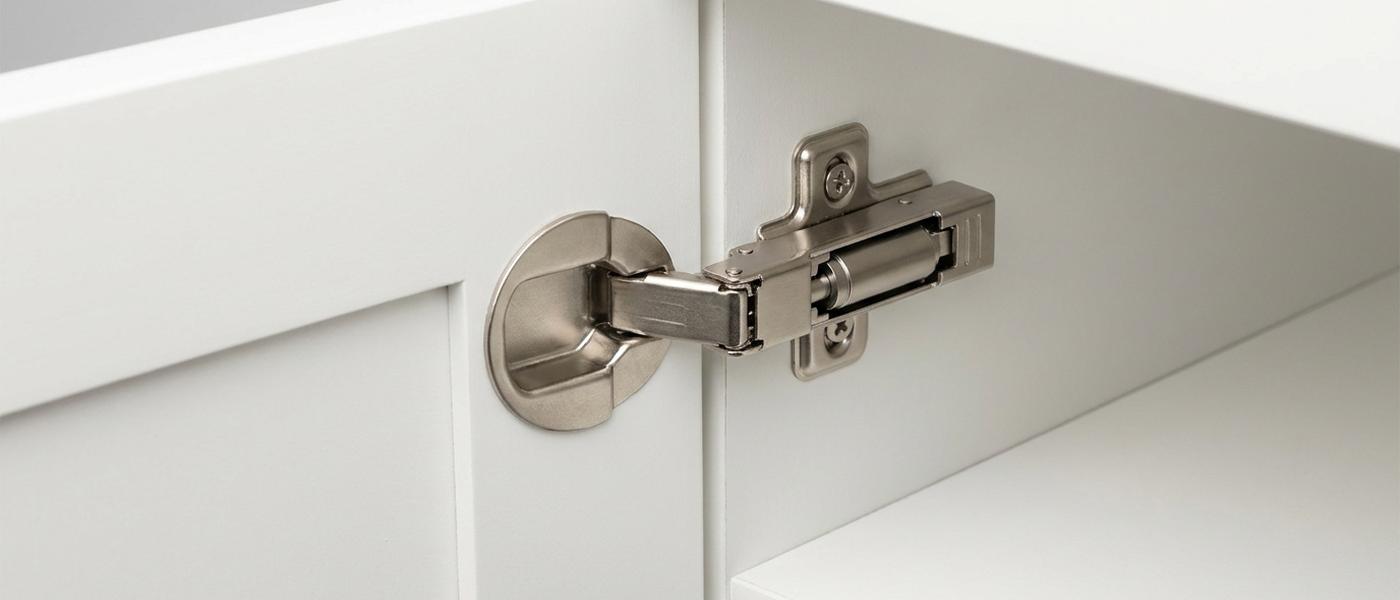
New cabinet doors arrive bored for concealed European hinges, which means the mounting plates have to go onto the face frames whatever your old cabinets used. If the kitchen currently has surface-mounted hinges you can see, that is a straightforward conversion. If it has old semi-concealed wrap-around hinges, the frames carry mortises and screw holes that have to be filled and made good. Neither is difficult; both take time and should appear on the quote rather than turning up as a surprise on day two.
The upgrade worth taking while the doors are off is soft-close. Full details are on the hardware and drawer upgrades page, but the short version is that it is a few dollars a door at the point when the labour is already happening, and several times that as a separate visit later.
When New Cabinet Doors Alone Is the Wrong Buy
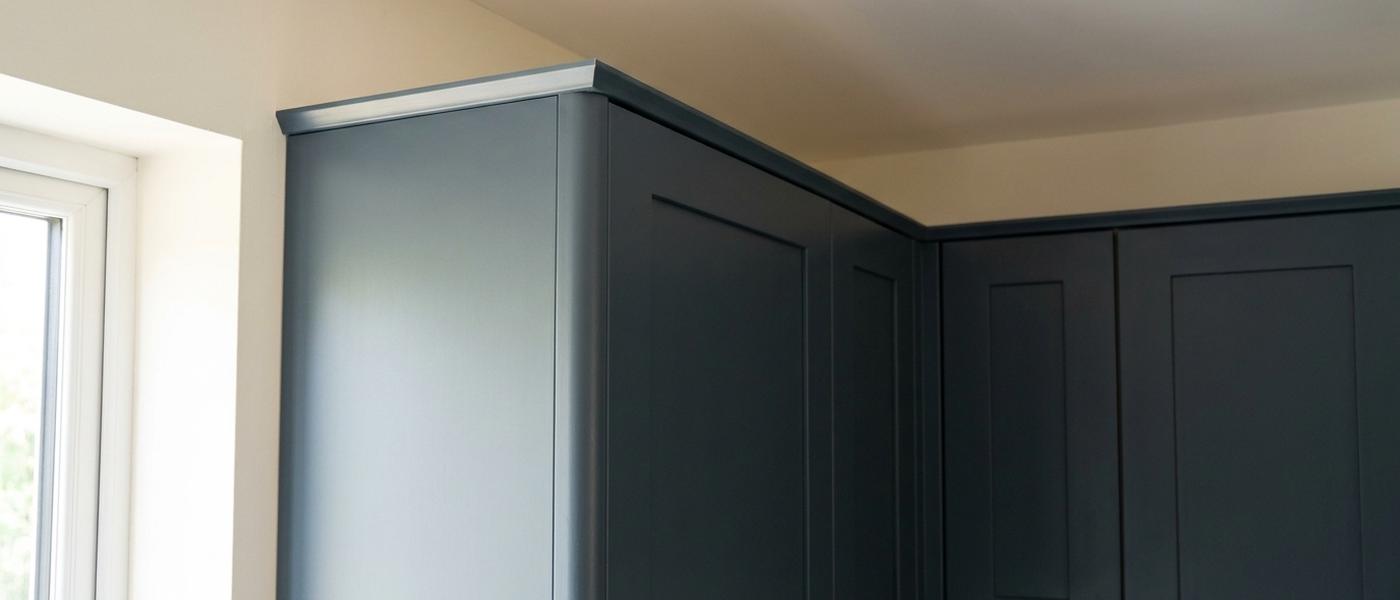
Two situations. If the cabinet face frames are a strong stained colour and the new cabinet doors are going in painted white, the contrast will look like a mistake rather than a design, and you will wish you had veneered the cabinets. And if the run has exposed end panels facing into the room, leaving them in the old finish undoes most of the visual gain. In both cases the extra cost of the full reface buys more than it looks like it does.
Cabinet refacing is dispatched across the consolidated Columbus–Muscogee County area and out into the Chattahoochee Valley: Columbus, Fort Benning, Fortson, Midland, Upatoi, Cataula, Ellerslie, Hamilton, Waverly Hall and Pine Mountain in Georgia, plus Phenix City and Smiths Station across the river in Alabama. Columbus and Muscogee County are the same government — Georgia's first consolidated city-county, merged in 1971 — so “city” here means the whole county: 203,711 people and 92,031 housing units, inside a metro area of 325,615. The cabinet work does not change when you cross the state line at the Chattahoochee; the drive time does, so say where you are when you call.